
Hi Lauri,
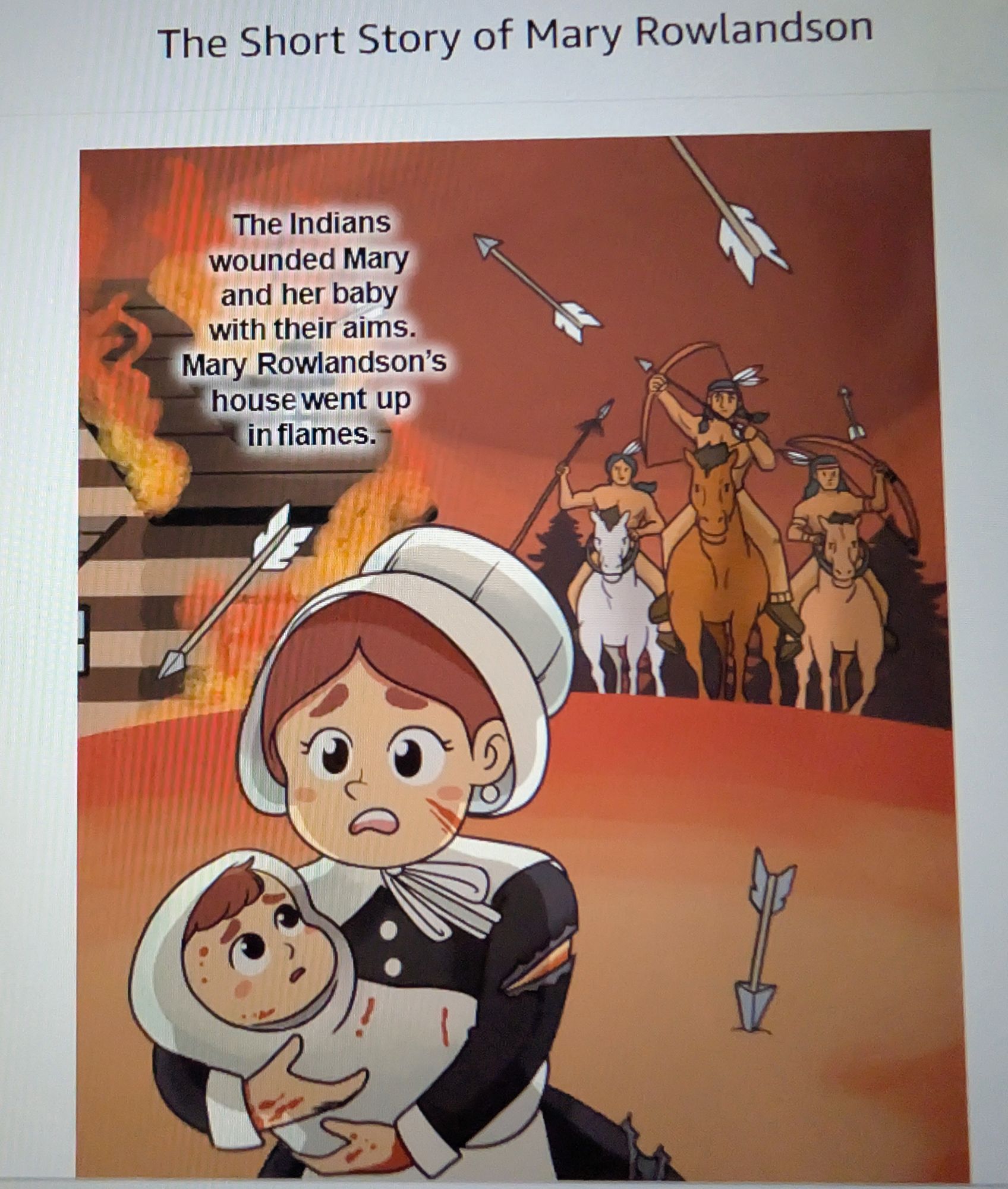
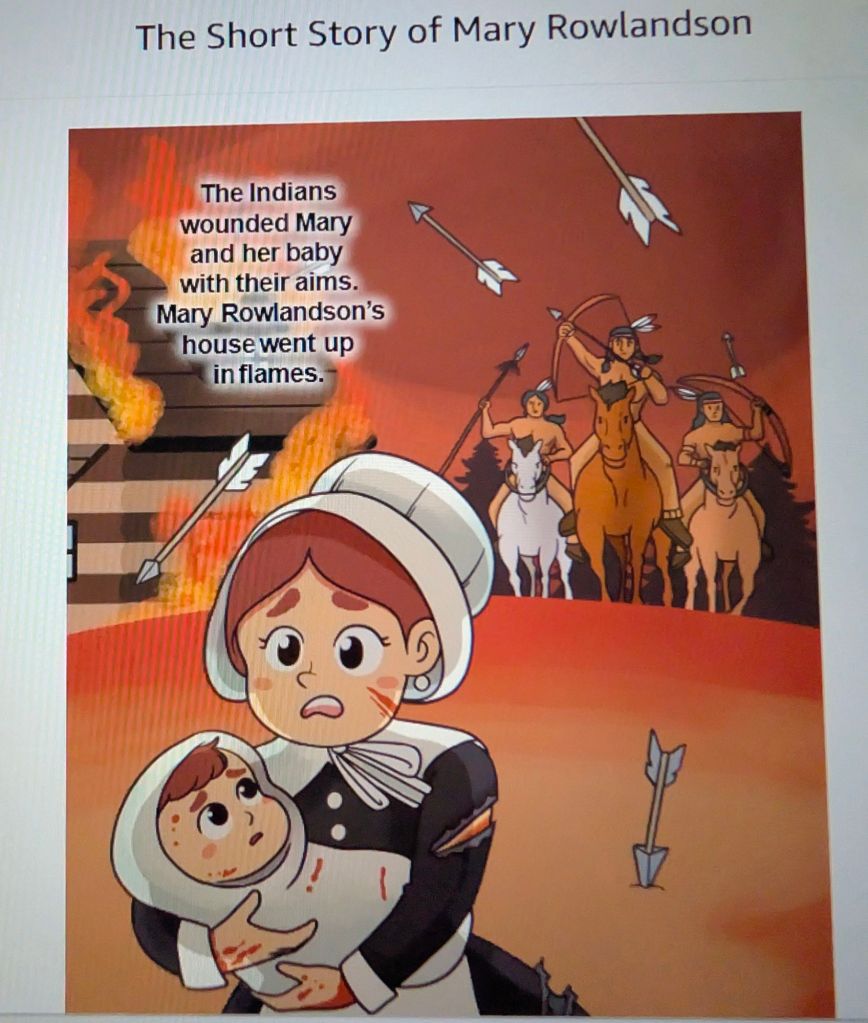
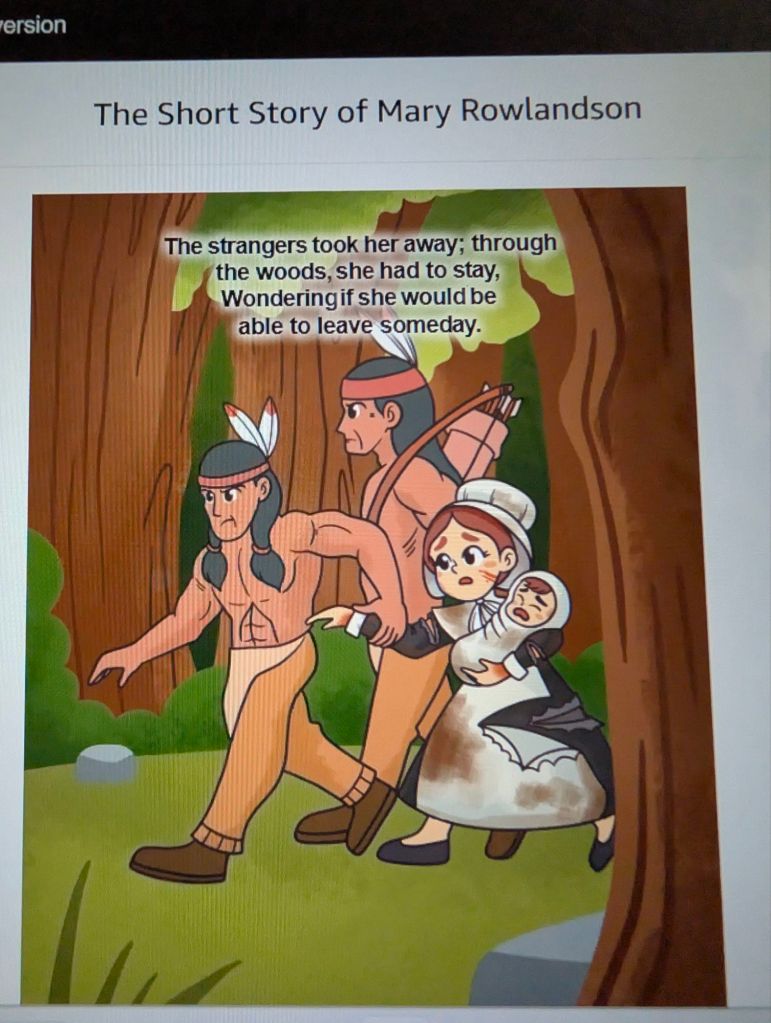
I am highly concerned about the book that I just mentioned to you, The Short Story of Mary Rowlandson (2025) by Lily Grace. Hadn’t looked inside when we spoke. I have now. I am asking that your Cloverly Publishing team look this over again. It is not in line with today’s standards. It has stereotyped and degrading illustrations and is programmed to teach very young children to be afraid of brown people. I haven’t seen illustrations like this in years and years. It promotes racism and fear of others.
The story is highly inappropriate for children at that age. Any age, frankly. The words and illustrations in this book are dangerous. These images have been used continuously to degrade Native Americans and allow white people to feel superior.
I hope this is an oversight and that bringing it to your attention will help Cloverly Publishing reconsider. Considering what we are witnessing in our country right now, the way brown people are being treated should put my concerns in perspective. Right now, in real time, men in masks are hitting, taking, and detaining Indigenous people because they are brown. Video verification is everywhere.
Mostly, there is no reference as to what white people did to Native Americans when they arrived on their land. This is a story for adults. For academics. For study. Not a quaint child’s story teaching how God works when dark people take white children. The author would better serve children by allegory, not crude drawings and words.
Choosing between right and wrong is not hard for me. This is wrong, and Cloverly Publishing’s choosing to sell such a book makes me very leery of doing business with you.
My family is descended from Mayflower pilgrims, and the Campbell mother and children who were kidnapped by Mohawks during the 1778 massacre in Cherry Valley, New York. I am neither proud nor angry. It is history. I share this only to point out that an adult perspective is needed to comprehend such layered and emotionally charged history. It has no business being put into our children’s minds and hearts.
Thank you,
Jenni Norum

 In a Word